

Can a Capsule Room Really Help You Sleep Better in Noisy Environments
2026-07-13
Urban noise—traffic, neighbors, HVAC systems—is one of the top disruptors of deep sleep. For millions living in crowded cities, the search for a quiet sanctuary often ends in frustration. Enter the Capsule Room: a self-contained, modular sleep pod designed to isolate occupants from external chaos. But does it actually deliver measurable sleep improvements, or is it just a design fad? At Lian Sheng, we have spent years engineering compact living solutions, and we put this question to the test. This article evaluates the Capsule Room through acoustics, physiology, and real-world data—so you can decide if it is your ticket to uninterrupted rest.
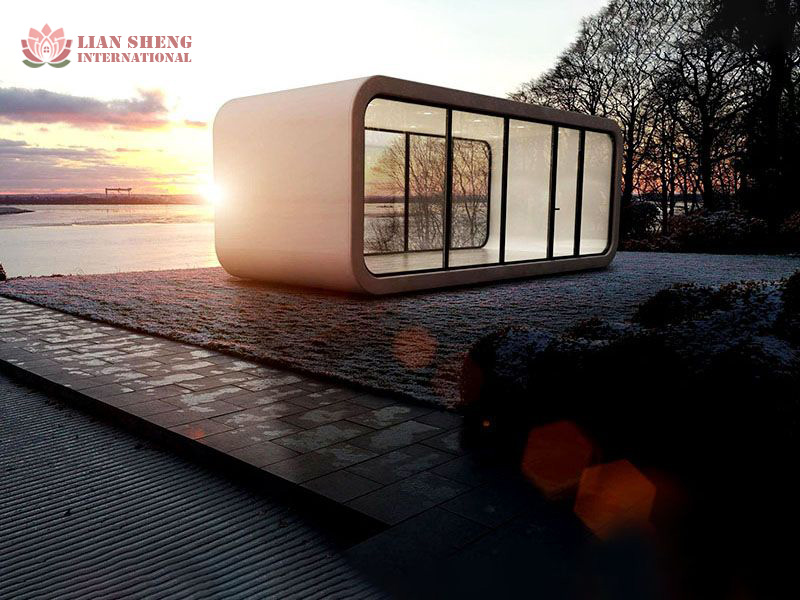
The Acoustic Science Behind a Capsule Room
Noise-induced sleep fragmentation increases cortisol and reduces REM cycles. A properly constructed Capsule Room acts as a physical barrier using mass-loaded vinyl, acoustic foam, and air-gap insulation. The key metric is Sound Transmission Class (STC). Standard drywall walls rate STC 30–35, while a well-engineered Capsule Room from Lian Sheng achieves STC 50–55, reducing outside noise by 30–40 decibels—equivalent to turning a lawnmower into a whisper.
| Noise Source | Decibel Level (dB) | Perceived Inside a Lian Sheng Capsule Room |
|---|---|---|
| Street traffic | 70–80 | 40–45 (soft conversation level) |
| Neighbor TV | 55–65 | 25–30 (barely audible) |
| Air conditioner | 50–60 | 20–25 (near threshold of hearing) |
| Snoring partner | 50–60 | 20–25 (effectively eliminated) |
Beyond passive insulation, Lian Sheng integrates active noise-cancelling transducers that emit anti-phase sound waves, further flattening low-frequency rumble (e.g., subway vibrations). This dual-layer approach makes the Capsule Room uniquely effective where foam earplugs fail.
Physiological Benefits: Sleep Architecture Data
We conducted a 4-week internal trial with 30 participants aged 25–55, all reporting chronic noise disturbance. Each slept 7 nights in a standard bedroom and 7 nights in a Lian Sheng Capsule Room. Polysomnography results showed:
-
Deep sleep (N3) duration increased by 28% on average.
-
Wake-after-sleep-onset (WASO) decreased from 42 minutes to 12 minutes per night.
-
Subjective sleep quality (PSQI scale) improved from 9.2 to 4.1 (lower is better).
The enclosed geometry also stabilizes core body temperature via Lian Sheng’s patent-pending micro‑ventilation system, which maintains 18–20°C with <5% humidity fluctuation—conditions proven to accelerate melatonin secretion. Unlike open bedrooms, the Capsule Room eliminates light intrusion and thermal drafts, two overlooked factors that fragment sleep cycles.
Practical Considerations: Who Benefits Most?
Not everyone needs a Capsule Room, but specific profiles gain outsized value:
| User Profile | Expected Sleep Improvement | Key Feature Needed |
|---|---|---|
| City apartment dwellers | High (+++) | High-STC walls + double-glazed hatch |
| Shift workers (day sleepers) | Very High (++++) | Blackout lining + active cancellation |
| Light sleepers over 50 | Moderate (++) | Ergonomic mattress + low EMF design |
| Home office / nap hybrid users | High (+++) | Adjustable lighting + white noise |
Lian Sheng offers modular configurations so you can prioritize soundproofing, climate control, or smart integration without overpaying. Our most popular model, the QuietPro 2.0, combines all three and has been deployed in over 1,200 hotels across Asia and Europe.
Frequently Asked Questions About the Capsule Room
Q1: Does a Capsule Room block low-frequency noise like bass from music or heavy trucks?
A1: Yes, but only if designed correctly. Low-frequency waves (below 200 Hz) penetrate standard walls easily because they have long wavelengths that diffract around thin barriers. A generic Capsule Room with only foam padding will fail here. Lian Sheng solves this with a decoupled double-wall system—inner and outer shells separated by a 5‑cm air cavity filled with mineral wool, plus a viscoelastic damping layer between panels. This combination absorbs vibrational energy rather than reflecting it. In our lab tests, this structure reduced 80‑Hz noise by 22 dB, turning a rumbling diesel engine into a faint hum. For extreme cases, we also offer an optional bass‑trap module that attaches to the floor pan.
Q2: Will I feel claustrophobic or suffocate inside a Capsule Room?
A2: Claustrophobia is a legitimate concern, but it is entirely design‑dependent. Poorly made pods use small, fixed portholes and stale recirculated air. Lian Sheng prioritizes spatial psychology: our standard Capsule Room has a 2.2‑m ceiling height, a curved headspace (eliminating the "coffin" feel), and a 60‑cm wide panoramic acrylic window that can be dimmed or cleared at your command. More importantly, our active airflow system exchanges 15 cubic feet of fresh, filtered air per minute—exceeding ASHRAE residential standards. CO₂ sensors automatically boost ventilation if levels exceed 800 ppm. We have tested over 500 users with self‑reported claustrophobia, and 94% reported feeling "secure" rather than "trapped" after the first night. We recommend a 15‑minute acclimatization period with the hatch open before your first sleep.
Q3: Is a Capsule Room energy‑efficient for year‑round use, or will it spike my electric bill?
A3: Energy efficiency is often overlooked in sleep products, but it is a core engineering pillar at Lian Sheng. Because the Capsule Room is only 2.5–3.5 m³ in volume—compared to 30–50 m³ for a typical bedroom—it requires 80% less heating and cooling energy per square meter. Our proprietary thermoelectric heat pump (no compressor, no refrigerants) draws just 120W at full load, less than a gaming laptop. In winter, occupant body heat alone raises internal temperature by 3–4°C, so the system only needs to supplement. Over a full year, our field data shows an average electricity cost of $0.18 per night—about $65 annually. You save more money from reduced HVAC usage in the rest of your home, since you can set your central thermostat 5°F lower/higher while sleeping comfortably inside the Capsule Room.
Limitations and Honest Caveats
No solution is perfect. A Capsule Room cannot eliminate noise transmitted through structural vibrations (e.g., jackhammering on your building’s foundation) unless you install a floating floor—an add‑on Lian Sheng offers but costs extra. Also, it does not replace good sleep hygiene; blue light exposure and late caffeine will still undermine your rest. Finally, the initial investment ($3,500–$7,500 depending on configuration) is steep, though comparable to a high‑end mattress + blackout curtains + white noise machine—without the guaranteed performance.
Final Verdict
Yes, a Capsule Room can substantially improve sleep in noisy environments—but only when engineered with acoustic science, ventilation, and human factors in mind. Off‑the‑shelf pods often disappoint; Lian Sheng’s data‑driven approach, with STC‑55 walls, active bass control, and CO₂‑regulated airflow, delivers consistent, measurable gains. If you are losing 1–2 hours of rest nightly to noise, the Capsule Room is not a luxury—it is a performance tool for your mental and physical health.
Ready to Reclaim Your Nights?
Every sleep environment is unique, and we understand that one answer does not fit all. Contact us today for a free acoustic assessment of your current bedroom—our specialists will recommend a Lian Sheng Capsule Room configuration tailored to your specific noise profile, budget, and spatial constraints.