
Can You Use a Snorkeling Set with Diving Fins for Freediving Training
2026-06-12
If you are new to breath-hold diving, you might wonder whether your existing Snorkeling Set with Diving Fins can serve as a training tool for freediving. The short answer is yes—but with important limitations. A standard recreational Snorkeling Set with Diving Fins is designed for surface swimming and shallow snorkeling. However, when used correctly, it can help beginners develop basic finning technique and breath control. To-Max, a brand known for durable and ergonomic snorkeling gear, offers models that bridge the gap between casual snorkeling and introductory freediving. This guide explains how to use such a set safely for training, where it falls short, and when to upgrade.
Key Differences: Snorkeling vs. Freediving Fins
| Feature | Snorkeling Set with Diving Fins (Standard) | Dedicated Freediving Fins |
|---|---|---|
| Blade Length | Short to medium (30–50 cm) | Long (70–100 cm+) |
| Material | Thermoplastic rubber, plastic | Carbon fiber, fiberglass |
| Kick Efficiency | Moderate, higher leg effort | High, less leg fatigue per kick |
| Buoyancy | Often positive or neutral | Typically negative |
| Best For | Surface snorkeling, occasional shallow dives | Depth training, efficient breath-hold diving |
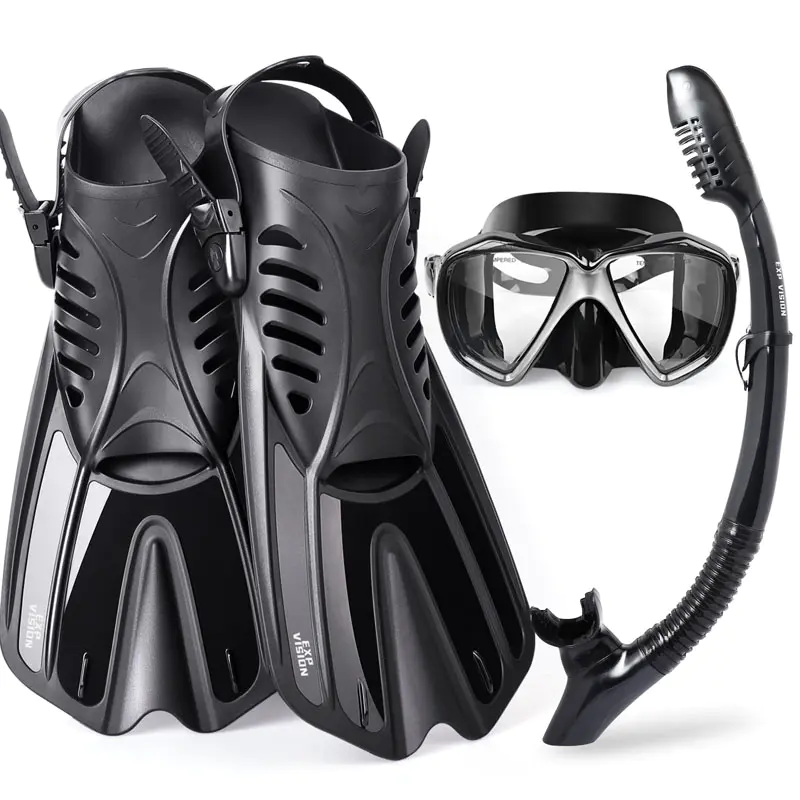
A Snorkeling Set with Diving Fins from To-Max features optimized foot pockets and moderate blade stiffness, which can help you practice proper frog kick and flutter kick without overworking your legs. For freediving training at depths under 5 meters, this setup is acceptable for drills like constant weight entry or dynamic apnea in a pool.
3 Practical Benefits of Using a Snorkeling Set with Diving Fins for Freediving Training
-
Lower cardiovascular load – Shorter fins reduce oxygen consumption during surface intervals, allowing more repetitions.
-
Easier leg strength development – The resistance is lighter, helping beginners correct bad knee bend before moving to long blades.
-
Travel-friendly – Many To-Max snorkeling sets break down or fit in carry-on luggage, unlike long freediving fins.
Critical Limitations to Know
-
Depth efficiency – Short fins lose propulsion below 10 meters. You will burn more oxygen to return to the surface.
-
Foot pocket rigidity – Standard snorkeling fins often lack the power transfer needed for monofin or advanced bi-fin techniques.
-
Mask and snorkel differences – A freediving-specific mask has lower volume for equalization; To-Max snorkeling masks are medium-volume but still usable for shallow training.
Snorkeling Set with Diving Fins FAQ – Common Questions
Q1: Can I practice static apnea using a standard Snorkeling Set with Diving Fins?
A1: Yes, you can. Static apnea (holding your breath while floating face down) does not require fins at all. However, wearing your Snorkeling Set with Diving Fins during static training helps you get used to the foot pocket pressure and fin weight while remaining motionless. This builds comfort for dynamic apnea later. To-Max fins are designed with soft rails, so they are comfortable even during long stationary periods. Always train with a safety buddy, even in shallow water.
Q2: Will using a Snorkeling Set with Diving Fins ruin my freediving technique?
A2: Not if you are aware of the differences. Short fins encourage a faster, smaller kick cycle. Long freediving fins require a slow, wide, hip-driven kick. If you only train with short fins, you may develop a choppy kick pattern. To avoid this, use your Snorkeling Set with Diving Fins for warm-ups, surface drills, and light conditioning sessions. Then, once per week, practice with long blades or a pool trainer fin. To-Max rubber fins actually have a medium stiffness that mimics some resistance of entry-level freediving fins, making the transition smoother.
Q3: How deep can I safely dive with a Snorkeling Set with Diving Fins?
A3: For recreational freediving training, stay above 5–6 meters (16–20 feet) with a standard Snorkeling Set with Diving Fins. Beyond that depth, the short blade cannot generate enough lift per kick, leading to increased oxygen consumption and possible equalization stress. Additionally, most snorkeling masks are not designed to withstand the pressure differential at 10+ meters, which can cause mask squeeze. To-Max snorkeling sets are tested for reliable sealing down to 8 meters, but for deeper freediving, invest in dedicated low-volume masks and long carbon fins. Always follow the one-up, one-down rule with a trained partner.
Final Verdict: Suitable for Early Training, Not for Depth Progression
Using a Snorkeling Set with Diving Fins for freediving training is practical for beginners focusing on pool drills, shallow water comfort, and finning fundamentals. Brands like To-Max offer reliable, affordable sets that withstand regular use in fresh and salt water. However, once you aim for depths beyond 8 meters or competition-level breath-hold times, upgrade to specialized freediving equipment.
Contact Us
Want to know which To-Max Snorkeling Set with Diving Fins best fits your training routine? Our dive team provides personalized gear advice based on your experience level and local dive conditions. Contact us today through the To-Max support page or email [email protected] – we typically reply within 12 hours with fin recommendations and safety tips for hybrid training.