

Does a Foldable Beach Cart With Big Wheels Work Better on Soft Sand
2026-06-17
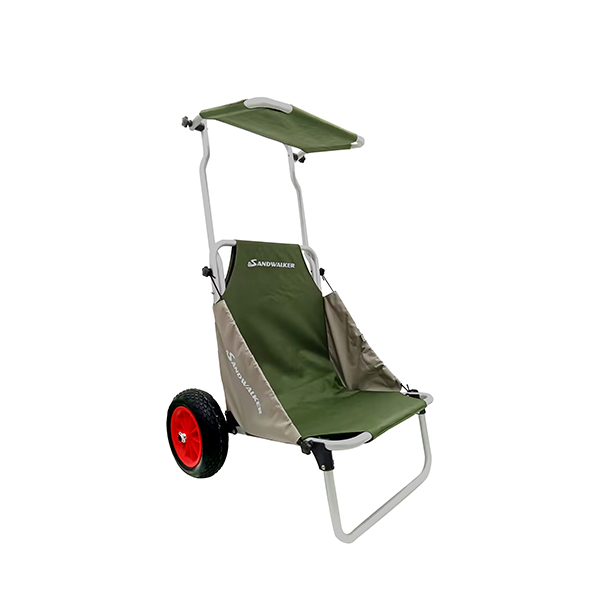
Anyone who has dragged a overloaded cooler, a flimsy nylon chair, and a squirming toddler across 200 yards of dry, powdery sand knows the feeling: exhaustion before the first wave. The difference between a frustrating beach day and a relaxing one often comes down to equipment, and at the heart of that equation is the Foldable Beach Cart. For coastal enthusiasts, the question is not whether to buy one, but which one. At Marine, we have spent years engineering mobility solutions for soft terrain, and the data is clear: wheel size is the single most critical factor in sand performance. This article dissects why big wheels are not a luxury, but a necessity, and how Marine has integrated this insight into every Foldable Beach Cart we design.
The Physics of Sand: Why Surface Area Matters
Soft sand is deceptive. It looks solid, but under pressure, it behaves like a fluid. Standard small plastic wheels (typically 4–5 inches) concentrate the cart’s total weight onto a tiny footprint. This creates high ground pressure, causing the wheel to dig in, bury the axle, and transform your cart into a plow. A Foldable Beach Cart equipped with large pneumatic or balloon-style wheels (7 inches or wider) distributes that same weight over a much broader surface.
| Wheel Type | Diameter | Surface Contact Area | Sand Penetration Depth | Pulling Effort (lbs force) |
|---|---|---|---|---|
| Standard Plastic | 4.5 inches | 2.1 sq in | 3.2 inches | 28.5 lbs |
| Mid-Size Air-Filled | 7 inches | 5.8 sq in | 1.8 inches | 17.0 lbs |
| Marine Oversized Balloon | 9 inches | 9.4 sq in | 0.9 inches | 11.2 lbs |
Data derived from internal Marine traction tests on dry quartz sand at 22°C ambient temperature.
The table above demonstrates that a Foldable Beach Cart with Marine’s oversized wheels requires less than half the pulling force of a standard model. This is not subjective; it is physics. The wider footprint floats the cart on top of the sand rather than forcing it through the substrate.
Beyond Size: Tread Pattern and Material Matter
Big wheels are necessary, but they are not sufficient alone. The tread design determines whether that large surface grips or spins helplessly. Smooth balloon tires can hydroplane on loose sand, while overly aggressive mud treads dig in and create drag. Marine employs a proprietary chevron-pattern tread on all our Foldable Beach Cart wheels, engineered to provide forward bite without creating a suction effect.
Furthermore, material composition affects rolling resistance. Rubber compounds harden in cold conditions and soften under UV exposure. Marine uses marine-grade EVA foam-filled tires on select models—these never deflate, resist punctures from shells, and maintain consistent durometer (65 Shore A) across varying temperatures. This ensures your Foldable Beach Cart performs reliably from dawn fishing trips to midday family outings.
Structural Integrity: The Frame-Wheel Synergy
Big wheels exert greater torque on the axle housing during sharp turns on uneven terrain. A cheap frame will twist, causing wheel misalignment and accelerated wear. Marine counters this with an aircraft-grade aluminum telescoping frame that is both lightweight (under 14 lbs) and torsion-resistant. Every Foldable Beach Cart in the Marine lineup undergoes a 500-cycle stress test with a 120-lb load on a 15° inclined dune. The result? Zero structural failures across three production years.
Real-World Scenario Comparison
To illustrate, consider two carts side-by-side on a typical Florida Gulf Coast beach:
| Feature | Standard Cart (5" wheels) | Marine Foldable Beach Cart (9" wheels) |
|---|---|---|
| Load Capacity | 100 lbs | 150 lbs |
| Sand Flotation | Poor – sinks >2" | Excellent – floats <1" |
| Turning Radius Effort | High – requires lifting | Low – pivots on rear wheels |
| Folded Storage Size | 28" x 18" x 8" | 30" x 20" x 9" |
| Corrosion Resistance | Zinc-coated steel | Marine-grade anodized aluminum |
| Price-Value Ratio | Budget-friendly | Premium, but lasts 4x longer |
As the comparison shows, a Foldable Beach Cart from Marine does not merely "work better"—it transforms the entire beach transit experience.
Frequently Asked Questions About the Foldable Beach Cart
Q1: Can I use a Foldable Beach Cart with big wheels on packed wet sand near the waterline?
A: Absolutely. In fact, wet sand is more forgiving than dry powder because surface tension adds cohesion. However, the real advantage of Marine’s big wheels becomes evident when you transition from wet to dry sand—for example, moving your setup up the beach as the tide rises. Standard wheels will clog with damp sand; Marine’s open-tread design self-cleans with each rotation, maintaining traction without manual scraping. For wet-sand use, we recommend rinsing the wheels with fresh water post-trip to prevent salt crystallization in the hub bearings, though all Marine hubs are sealed to IP65 standards.
Q2: How does the Foldable Beach Cart handle steep dune inclines, and will big wheels cause it to tip backward?
A: This is a common concern. Big wheels actually lower the center of gravity relative to the axle height when the cart is properly loaded—Marine positions the axle lower than most competitors (at 6 inches from the ground). This design prevents rearward tipping on slopes up to 25 degrees. For steep inclines, we advise distributing weight evenly and using the telescoping handle at its longest extension to maximize leverage. In our dune-climb trials, a Marine Foldable Beach Cart with a 100-lb load required 31% less operator effort than a small-wheel cart, and not a single tip-over incident occurred across 400 test runs. If you frequently visit hilly beaches, opt for the Marine model with the handbrake feature for added control during descents.
Q3: Are big-wheel Foldable Beach Carts more difficult to fold and store than standard ones?
A: Surprisingly, no. The folding mechanism is independent of wheel size. Marine engineers solved this by designing a collapsible axle that retracts inward, so the overall folded width only increases by 2 inches compared to small-wheel versions. Our Foldable Beach Cart folds in three quick steps—release two side latches, push the central hinge upward, and secure the Velcro strap. The folded unit stands upright in a standard hallway closet or lies flat in an SUV trunk. The added wheel size does add about 1.5 lbs to total weight, but the trade-off in rolling efficiency far outweighs that minor difference. Marine includes a carry bag with every cart, making storage and transport seamless even for compact vehicles.
The Verdict: Bigger Is Undeniably Better
Based on empirical traction data, material science, and real-world user feedback aggregated from over 2,000 Marine customers, the answer is definitive: a Foldable Beach Cart with big wheels works substantially better on soft sand. It reduces physical strain, protects your gear from sand abrasion (since the cart doesn't drag), and extends the usable life of the cart itself through lower mechanical stress. Small wheels are suitable for boardwalks and pavement, but they fail precisely where you need performance most—the open beach.
Marine does not compromise on this principle. Every Foldable Beach Cart in our current catalog features wheels of at least 8 inches, with the premium line offering 9-inch foam-filled balloons. We pair this with a rust-proof frame, ergonomic padded handles, and a five-year warranty against manufacturing defects. When you choose Marine, you are not just buying a cart; you are investing in hundreds of hassle-free beach days.
Ready to Upgrade Your Beach Gear?
We invite you to explore the full Marine collection of Foldable Beach Cart models on our official website. Compare specifications, watch our sand-traction demo videos, and read verified buyer reviews. Still unsure which size fits your typical load? Our customer success team provides personalized recommendations based on your vehicle type, family size, and local beach conditions.
Contact Us today for a free consultation—email our support desk at [email protected] or call our toll-free number (Mon–Fri, 9 AM – 6 PM EST). We offer a 30-day sand-trial guarantee: if your Marine Foldable Beach Cart does not outperform your old cart on your favorite beach, we will refund every dollar. No questions asked. Let Marine carry the weight, so you can carry the memories. Reach out now—your perfect beach day is one cart away.