

How can you stay warm in a hiking hammock during cold weather camping
2026-04-23
Cold weather camping in a Hiking Hanging Hammock presents a unique challenge: heat loss from below. Unlike tents, hammocks leave your back exposed to moving air, which rapidly drains body heat. With the right techniques and gear from Jiayu, you can sleep warmly even near freezing temperatures. This guide explains proven methods to stay comfortable and safe.
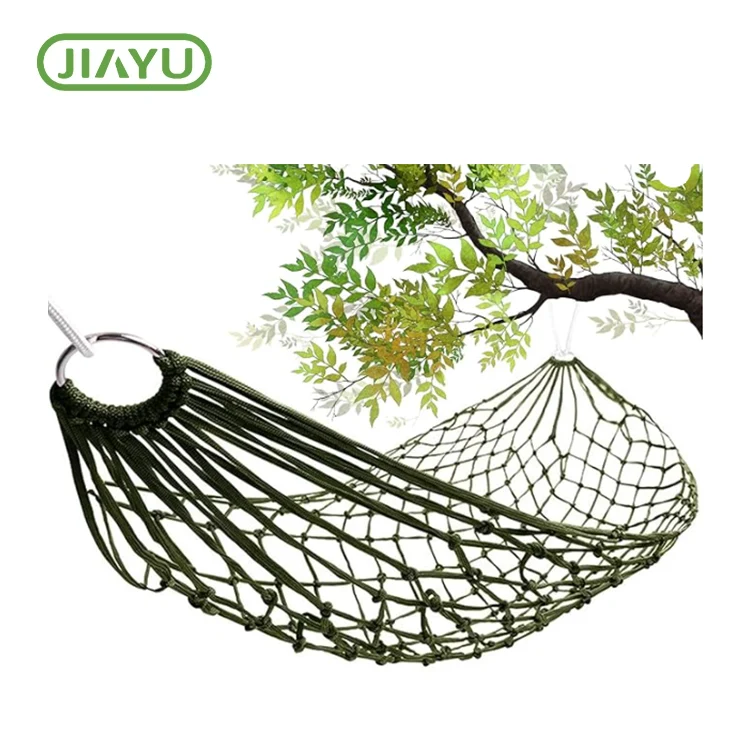
Understanding heat loss in a hammock
Conduction and convection are your main enemies. Your body compresses the insulation of a sleeping bag beneath you, while wind passing under the hammock carries warmth away. A solution requires three layers: bottom insulation, top insulation, and wind protection.
Essential methods to stay warm
| Method | Purpose | Recommended Action |
|---|---|---|
| Underquilt | Blocks convective heat loss | Use a Jiayu underquilt fitted to your hammock |
| Sleeping pad | Adds conductive barrier | Inflatable pad with R-value above 4 |
| Top quilt | Traps body heat | Down or synthetic fill, rated 10°F below expected low |
| Wind sock or tarp | Stops air movement | Pitch tarp low to ground on windward side |
| Hot water bottle | Supplemental warmth | Fill Nalgene bottle, place in footbox |
Step-by-step warm setup
-
Hang your Hiking Hanging Hammock with a structural ridge line for consistent sag.
-
Attach an underquilt from Jiayu so it sits snugly against the hammock bottom without gaps.
-
Place a closed-cell foam pad inside the hammock under your torso.
-
Use a top quilt instead of a mummy bag for easier movement.
-
Pitch a large tarp in "turtleneck" mode — sides close to the hammock.
-
Change into dry base layers before getting in. Moisture from sweat or rain will freeze.
Hiking Hanging Hammock FAQ常见问题大全
Q: What temperature rating should my underquilt have for winter hammock camping
A: Your underquilt should be rated at least 10°F (5°C) lower than the expected nighttime low. For example, if temperatures drop to 20°F (-7°C), choose an underquilt rated for 10°F (-12°C). This buffer accounts for wind, humidity, and individual metabolic differences. Jiayu underquilts feature differential cut and baffle design to eliminate cold spots. Pair with a foam pad inside the hammock for an extra R-value boost. Never rely on a sleeping bag alone — compression ruins its insulation underneath you.
Q: Can I use a regular sleeping pad instead of an underquilt in a Hiking Hanging Hammock
A: Yes, but with important limitations. A sleeping pad prevents conductive heat loss but does nothing to stop convective wind chill under the hammock. To make a pad work, choose an inflatable pad with R-value of 4 or higher, partially inflate it (about 80%) so it conforms to the hammock curve, and place it inside your hammock but under your sleeping bag. The pad will shift overnight. For reliable cold weather camping, combine a pad with a Jiayu underquilt — the pad blocks conduction, and the underquilt stops convection. Pads alone fail below 40°F (4°C) due to side gaps and movement.
Q: How do I prevent condensation from freezing inside my hammock setup
A: Condensation happens when warm, moist breath meets a cold tarp or hammock fabric. To prevent ice buildup, increase ventilation without creating drafts. Pitch your tarp with a small gap at the ridge line or leave one end slightly open on the leeward side. Use a Jiayu breathable hammock fabric that allows moisture vapor to escape. Avoid cooking or boiling water inside the hammock. Before sleeping, wipe down any existing moisture with a small microfiber cloth. In sub-freezing conditions, a lightweight vapor barrier liner inside your top quilt can also keep down insulation dry, though some users find it clammy.
Final checklist for cold weather hammocking
-
Underquirt (rated below target low) — Jiayu recommended
-
Closed-cell foam pad (R-value 4+) as backup
-
Wind-resistant tarp with low pitch
-
Dry wool or synthetic base layers
-
Hot water bottle at foot end
-
Ventilation to manage frost
Contact us
Ready to upgrade your cold weather hammock kit Jiayu offers purpose-built underquilts, tarps, and Hiking Hanging Hammock systems designed for four-season comfort. Visit our website to explore technical specs and user guides. For personalized advice on your next winter camping setup, contact us directly through our online form or email support. Stay warm, stay safe, and sleep well under the stars.