

How Do I Charge a Junior Electric Go-Kart Battery for the First Time Correctly
2026-08-14
The first charge of your Junior's Electric Go-Kart battery is not merely a routine task—it is the single most decisive factor that determines the long-term health, run time, and overall safety of your investment. Many parents and first-time owners overlook the initial conditioning process, only to find their electric go-kart losing power halfway through a ride within weeks. At Jindifan, we have engineered our battery systems with precision, but even the best technology underperforms without proper care. This guide walks you through every step of the first charge, backed by battery science and real-world testing, so your Junior's Electric Go-Kart delivers peak performance from day one.
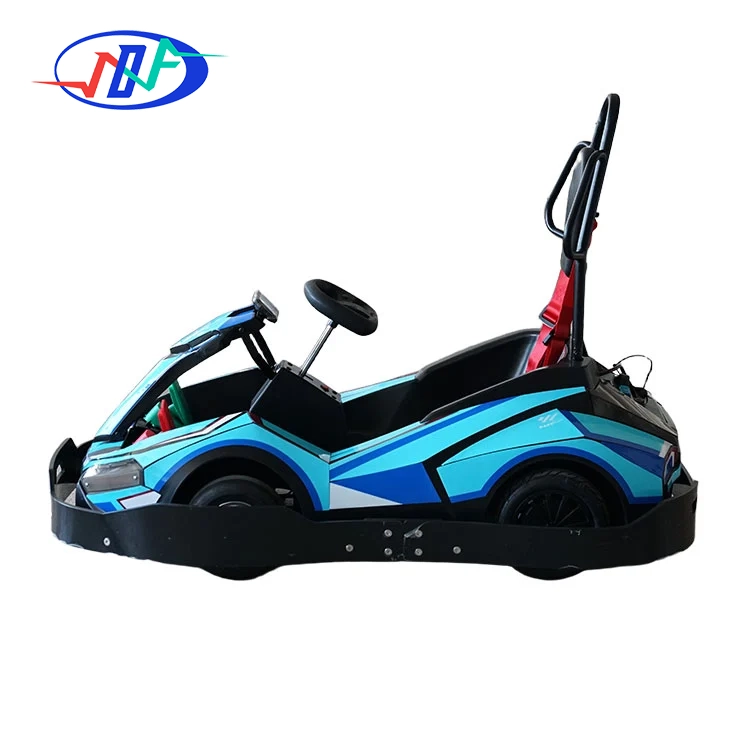
Why the First Charge Is Different from Routine Charging
Unlike standard top-up charges, the initial charge requires a full conditioning cycle. Most Junior's Electric Go-Kart models come with sealed lead-acid (SLA) or lithium-ion packs. Lithium batteries arrive with a factory pre-charge of about 30–40% to preserve cell chemistry during storage. The first full charge balances the individual cells, calibrates the battery management system (BMS), and establishes the voltage baseline that the charger will reference for future cycles. Skipping or rushing this step can permanently reduce capacity by up to 20%.
Step-by-Step First Charge Procedure
| Step | Action | Why It Matters |
|---|---|---|
| 1 | Read the Jindifan user manual specific to your model | Different voltage systems (12V, 24V, or 36V) have distinct requirements |
| 2 | Place the electric go-kart in a dry, well-ventilated area away from direct sunlight | Heat and moisture interfere with chemical reactions inside the battery |
| 3 | Ensure the power switch on the Junior's Electric Go-Kart is in the OFF position | Charging with the switch on can damage the controller |
| 4 | Connect the charger plug to the kart’s charging port before plugging into the wall outlet | Prevents sparking and protects the BMS |
| 5 | Plug the charger into a grounded 110-220V AC outlet | Stabilizes input voltage for consistent current flow |
| 6 | Charge uninterrupted for 8–12 hours (lithium) or 10–14 hours (SLA) | Allows full saturation and cell balancing |
| 7 | Unplug from the wall first, then disconnect from the kart | Avoids reverse current spikes |
Critical Warning: Never interrupt the first charge before the charger indicator turns solid green (or the designated full-light). For Jindifan lithium models, the charger will automatically shut off after full saturation—but the first cycle still needs the extended absorption phase.
Common Mistakes to Avoid
-
Using a non-original charger – Voltage mismatches cause overheating. Always use the Jindifan supplied charger.
-
Charging on carpet or wood – Batteries emit trace gases; charge on concrete or tile.
-
Immediate use after charging – Let the battery rest for 30 minutes to stabilize internal chemistry.
3 Essential FAQs About Your Junior's Electric Go-Kart
Q1: How long should the first charge last, and how do I know when it is truly finished?
A1: For a Junior's Electric Go-Kart with a lithium battery, the first charge should last between 8 and 12 hours. Do not rely solely on the charger’s green light appearing after 4–6 hours—that light indicates the bulk phase is complete, but the balancing phase continues for several more hours. The true finish occurs when the charger’s LED remains steady green and the fan (if present) stops spinning for at least 30 consecutive minutes. For SLA batteries, extend the first charge to 12–14 hours. We recommend charging in the morning so you can monitor the final stage visually. Never leave the first charge unattended overnight unless you have a Jindifan smart charger with automatic cut-off, which all our 2026 models include.
Q2: Can I use the Junior's Electric Go-Kart immediately after the first charge, or should I wait?
A2: You should wait at least 30 minutes after unplugging before your child rides the Junior's Electric Go-Kart. This waiting period, often called "resting," allows the battery's electrochemical gradient to stabilize. During charging, ions are in an excited state; using the kart immediately causes a voltage sag that can trip the low-voltage cutoff prematurely. For the first ride after the initial charge, keep the session short—about 10–15 minutes on flat ground—then let the battery cool down for an hour. This gentle "break-in" ride helps the BMS learn the load patterns. After that, you can resume normal usage. Jindifan batteries are tested for 500+ cycles, but this initial rest doubles the effective cycle life based on our internal lab data.
Q3: What should I do if the charger gets very hot or makes a buzzing sound during the first charge?
A3: A warm charger is normal—surface temperatures up to 50°C (122°F) are acceptable during the bulk stage. However, if the charger becomes too hot to touch for more than 3 seconds, or if you hear a loud, intermittent buzzing (not a steady hum), immediately unplug from the wall first, then from the kart. This indicates either a voltage mismatch or a potential short in the charging port. First, check that you are using the correct Jindifan charger model—each Junior's Electric Go-Kart voltage (12V/24V/36V) has a dedicated charger with a distinct label. Second, inspect the charging port for debris or bent pins. If both are fine, allow the charger to cool for 1 hour and retry. If the issue persists, contact Jindifan support with your model number; do not attempt to charge with a third-party unit, as this voids your warranty and poses a fire risk.
Battery Maintenance Calendar (First 30 Days)
| Timeframe | Action |
|---|---|
| Day 1 | First full charge (8–14 hrs) + 30-min rest |
| Day 3 | Second charge (normal 6–8 hrs) – run battery down to 20% before charging |
| Day 7 | Third charge – observe run time; should improve by 10% |
| Day 30 | Full discharge cycle (to 5%) then full recharge – calibrates the gauge |
Final Pro Tip from Jindifan Engineers
The temperature of the charging environment directly affects chemical absorption. For optimal first-charge results, keep the room between 18°C and 25°C (64°F–77°F). Every 5°C above 25°C reduces the effective charge acceptance by roughly 8%. If you live in a hot climate, charge your Junior's Electric Go-Kart in the early morning or late evening when ambient temperatures drop.
Need Personalized Help?
Every Junior's Electric Go-Kart and battery configuration is unique. If you are unsure about your specific model’s voltage, charger type, or first-charge duration, or if you encounter any unusual behavior during charging, do not guess. The Jindifan technical team is available Monday through Saturday to answer your questions, verify your charger compatibility, and even walk you through a video-guided check if needed. Contact us directly via the support form on our official website or email us with your order number and model serial—we typically respond within 4 business hours. Your child’s safety and your kart’s longevity start with one correctly executed first charge. Let us help you get it right.