

How Do Walking Poles Improve Stability, Performance, and Future Outdoor Mobility?
2025-12-10
Walking poles continue to gain global attention as essential gear for hiking, trekking, fitness walking, and rehabilitation.
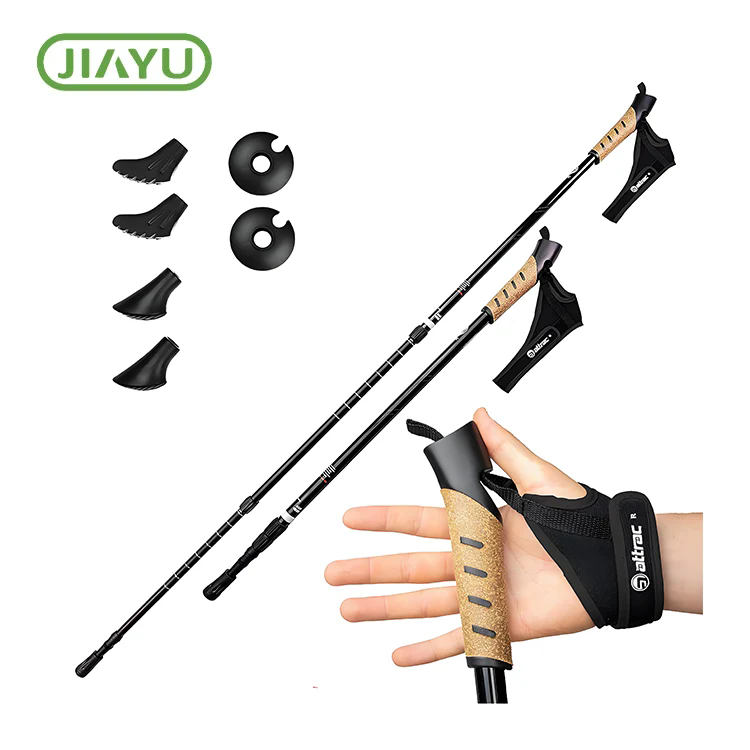
How Do Walking Poles Elevate Outdoor Support and Movement?
Walking poles are engineered to provide stability, reduce pressure on the knees, and enhance propulsion during walking or hiking. They distribute weight more evenly across the upper body, improving endurance on uneven terrains. Their popularity has grown among outdoor enthusiasts, seniors, fitness walkers, and rehabilitation users due to their multifunctional support and ergonomic design.
What Technical Features Define a High-Performance Walking Pole?
Below is a professional specification table representing a high-quality modern Walking Pole suitable for hiking, trekking, and fitness walking:
| Parameter | Specification |
|---|---|
| Pole Material | 7075 Aerospace-grade Aluminum / Carbon Fiber |
| Length Range | 65–135 cm adjustable |
| Locking System | Quick-Lock external lever + Anti-slip internal mechanism |
| Grip Material | Ergonomic EVA foam / Natural cork handle |
| Strap Style | Adjustable moisture-wicking safety wrist strap |
| Shock Absorption | Built-in spring-loaded anti-shock system (optional) |
| Pole Sections | 3-section telescopic or foldable 4-section |
| Tip Options | Tungsten steel tip, rubber cap, mud basket, snow basket |
| Weight | 180–290 g per pole depending on material |
| Recommended Use | Hiking, trekking, Nordic walking, travel, rehabilitation, senior support |
These features ensure stability, durability, and professional performance suited for varied terrains, from forest trails to mountain ascents.
How Do Walking Poles Enhance Mobility and Outdoor Confidence?
A. How Do Walking Poles Reduce Joint Strain and Improve Balance?
Walking poles increase the stability triangle by adding two external support points. This stabilizing structure distributes body weight across both the upper and lower body, reducing stress on knees and ankles. When used correctly, they decrease vertical load impact by up to 30%, making them valuable for both challenging terrain and joint-sensitive walkers.
The reinforced pole tips grip the ground securely, improving balance on slippery, loose, or rocky surfaces. The shock-absorbing system further reduces vibration transmitted to the hands and wrists, allowing longer activity duration without fatigue.
B. How Do Ergonomic Grips Improve User Comfort and Control?
Ergonomic EVA or cork grips conform naturally to the hand, reducing strain during long sessions. Cork grips regulate moisture and temperature, making them ideal for extended hikes, while EVA grips provide soft cushioning and slip resistance. Adjustable wrist straps stabilize the hand-to-pole connection, increasing propulsion efficiency with each step.
C. How Do Adjustable and Foldable Designs Increase Versatility?
Modern walking poles offer multi-section telescopic or foldable construction that expands and collapses quickly. This design allows easy packing for flights or backpacks while supporting precise height adjustment for users of varying heights. The quick-lock mechanism enhances safety by preventing slippage, even under heavy pressure during steep climbs.
D. How Do Material Choices Affect Performance?
-
Carbon fiber poles: lightweight, vibration-absorbing, best for long-distance walking.
-
7075 aluminum poles: stronger and more impact resistant, ideal for rocky or harsh terrain.
Both materials support long-term durability and resist bending or cracking under pressure.
How Are Walking Poles Evolving for Future Outdoor and Urban Mobility?
A. Rising Adoption Among Urban Fitness Walkers
Fitness walking and Nordic walking are expanding rapidly in urban environments. Walking poles are being engineered with lighter materials, smoother swing dynamics, and more ergonomic grips to appeal to metropolitan users seeking low-impact full-body workouts.
B. Growth in Rehabilitation and Senior Mobility Support
Walking poles offer excellent transitional support between walking aids and full mobility. Rehabilitation users benefit from reduced joint stress, improved gait alignment, and enhanced confidence. Poles with shock absorption and greater adjustability are becoming more common in medical and therapeutic usage.
C. Advanced Material Science Integration
Manufacturers are shifting toward aerospace-grade materials, reinforced carbon fiber, and corrosion-resistant aluminum. These enhancements improve durability, reduce overall weight, and increase pole responsiveness for more natural movement.
D. Expansion of Foldable and Ultra-Light Designs
Foldable Z-type walking poles are emerging as a leading trend due to their portability and quick deployment. They appeal especially to travelers, minimalist hikers, and users who require compact gear for unpredictable environments.
E. Development of Smart Walking Poles
Future innovations may include:
-
built-in step tracking and heart-rate sensors,
-
enhanced shock monitoring for uneven terrain,
-
LED safety indicators for night walking,
-
improved ergonomic geometry using biomechanical analysis.
These developments aim to combine mobility assistance with performance insights for outdoor enthusiasts.
Common Questions About Walking Poles
Q: How should walking poles be adjusted for correct height?
A: The elbows should form a 90-degree angle when holding the pole with the tip on the ground beside the foot. This alignment offers maximum balance and minimizes joint pressure. Adjustments may vary slightly depending on terrain—shorter for uphill and longer for downhill.
Q: Are walking poles effective for seniors or rehabilitation users?
A: Yes. Walking poles provide additional support points, helping users maintain balance and reduce the risk of falls. They also improve posture and reduce knee strain, making them suitable for rehabilitation and low-impact fitness routines.
How Will Walking Poles Continue to Support the Future of Outdoor and Everyday Mobility?
Walking poles play a vital role in enhancing stability, comfort, and endurance during walking and hiking. Their adjustable structure, ergonomic hand support, and durable materials make them suitable for multiple terrains and user groups, from adventure seekers to seniors seeking improved balance. As technology advances, walking poles will continue to evolve toward lighter materials, smarter interfaces, and more adaptable designs, creating a future where mobility support is more efficient and accessible.
JIAYU specializes in designing and manufacturing high-quality walking poles that prioritize performance, safety, and user comfort. For product details, customization options, or wholesale inquiries, please reach out through our contact us channel to receive professional support and guidance.