

How Do Walking Poles Improve Stability and Endurance Across Different Terrains?
2025-12-30
Article Abstract
Walking poles are widely adopted in hiking, trekking, Nordic walking, and rehabilitation-related walking activities due to their ability to enhance balance, distribute physical load, and improve walking efficiency. This article provides a structured and in-depth overview of walking poles, focusing on product fundamentals, technical parameters, real-world applications, and future development directions.
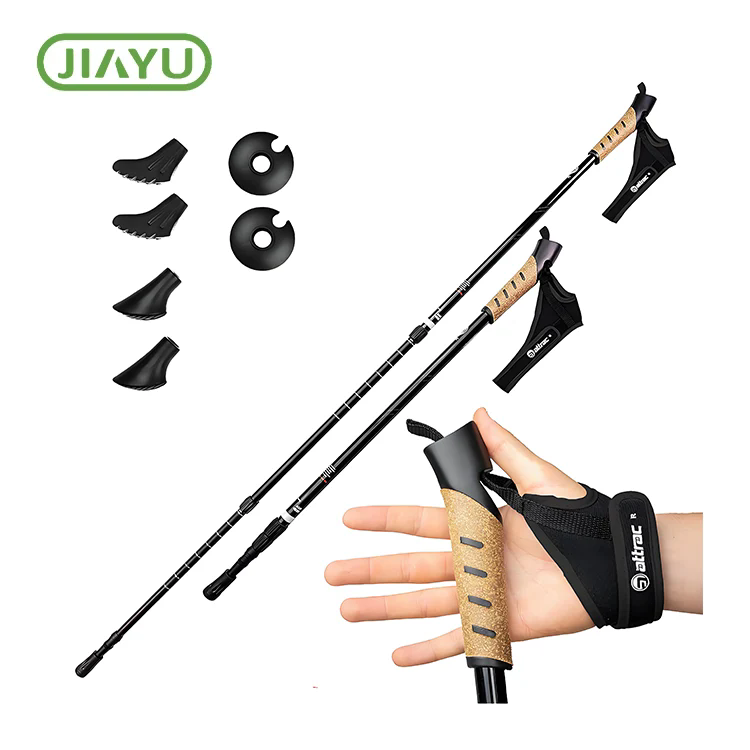
Table of Contents
- How Are Walking Poles Designed to Support Modern Walking Needs?
- How Do Product Parameters Define Walking Pole Performance?
- How Should Walking Poles Be Used Across Different Scenarios?
- How Will Walking Poles Evolve With Future Walking Trends?
- How Do Common Questions About Walking Poles Get Answered?
- How Does JIAYU Contribute to Reliable Walking Pole Solutions?
How Are Walking Poles Designed to Support Modern Walking Needs?
Walking poles are functional mobility tools engineered to enhance walking stability, reduce joint stress, and improve posture during movement. Originally developed for mountaineering and alpine trekking, walking poles have evolved into versatile equipment suitable for urban walking, long-distance hiking, trail exploration, and fitness-oriented Nordic walking.
The core principle behind walking pole design lies in load redistribution. By transferring a portion of body weight from the lower limbs to the upper body, walking poles help reduce pressure on knees, ankles, and hips. This function is especially relevant on uneven terrain, downhill paths, and extended walking sessions.
Modern walking poles integrate ergonomic grips, adjustable shaft systems, shock-absorbing mechanisms, and interchangeable tips. These features allow users to adapt to varying terrain conditions such as asphalt, gravel, forest trails, snow, and rocky surfaces. From a structural perspective, walking poles are designed to balance strength, weight efficiency, and long-term durability.
How Do Product Parameters Define Walking Pole Performance?
Technical parameters play a decisive role in determining walking pole performance, comfort, and application suitability. Understanding these parameters helps clarify how a walking pole performs under different usage conditions.
| Parameter | Specification Range | Practical Significance |
|---|---|---|
| Material | Aluminum Alloy / Carbon Fiber | Affects weight, vibration control, and durability |
| Length Adjustment | 65–135 cm (Adjustable) | Ensures ergonomic fit for different user heights |
| Locking System | Flip Lock / Twist Lock | Controls stability and ease of length adjustment |
| Grip Material | EVA Foam / Cork / Rubber | Influences comfort, moisture control, and grip security |
| Tip Type | Carbide Tip / Rubber Tip | Optimizes traction on different surfaces |
| Shock Absorption | Integrated / Optional | Reduces impact stress on wrists and elbows |
Material selection directly influences walking pole behavior. Aluminum alloys are known for their impact resistance and cost efficiency, while carbon fiber poles emphasize lightweight performance and vibration dampening. Adjustable length systems ensure adaptability across uphill and downhill walking, supporting ergonomic posture alignment.
How Should Walking Poles Be Used Across Different Scenarios?
Walking poles are applied across diverse environments, each requiring specific usage techniques. In hiking and trekking, poles improve stability on uneven terrain and assist in elevation changes. During Nordic walking, poles are used rhythmically to engage upper body muscles and enhance cardiovascular efficiency.
In urban walking environments, walking poles contribute to posture correction and joint protection, especially for long-distance walkers and older users. Rehabilitation-oriented walking emphasizes controlled movement and reduced joint impact, where walking poles act as balance aids rather than propulsion tools.
Proper adjustment is essential. For flat terrain, the pole length should allow elbows to maintain approximately a 90-degree angle. On uphill terrain, slightly shorter lengths improve leverage, while downhill walking benefits from extended pole length to support descent control.
How Will Walking Poles Evolve With Future Walking Trends?
Future walking pole development aligns closely with broader health, outdoor recreation, and material innovation trends. Lightweight composites, enhanced ergonomic research, and modular design concepts are shaping next-generation walking poles.
Smart integration is an emerging direction, with experimental designs exploring step-count monitoring, pressure sensing, and gait analysis. Sustainability is also becoming a priority, encouraging recyclable materials and long-life component design.
As walking gains recognition as a low-impact fitness activity across age groups, walking poles are expected to transition further from niche outdoor gear into mainstream wellness equipment.
How Do Common Questions About Walking Poles Get Answered?
How do walking poles reduce knee and joint stress?
Walking poles redistribute body weight by engaging the upper body, reducing direct impact on knees and lower joints, especially during downhill movement.
How should walking pole length be adjusted for proper use?
Correct adjustment positions the elbow at a right angle when the pole tip contacts the ground, ensuring ergonomic load distribution.
How do aluminum and carbon fiber walking poles differ in performance?
Aluminum poles emphasize durability and impact resistance, while carbon fiber poles prioritize lightweight handling and vibration reduction.
How Does JIAYU Contribute to Reliable Walking Pole Solutions?
JIAYU focuses on delivering walking pole solutions that balance structural reliability, ergonomic comfort, and material efficiency. By integrating standardized manufacturing processes with application-driven design principles, JIAYU walking poles address the needs of hiking enthusiasts, fitness walkers, and professional buyers seeking consistent quality.
Product development emphasizes parameter transparency, allowing users to evaluate material composition, locking mechanisms, and grip systems with clarity. This approach supports informed selection across different walking environments and usage intensities.
For further product specifications, customization inquiries, or bulk cooperation opportunities, interested parties are encouraged to contact us directly. JIAYU remains committed to supporting long-term walking performance through dependable walking pole solutions.