

Article Summary: A Tool Bag is more than a storage accessory; it is a practical solution for organizing tools, improving efficiency, and reducing downtime on job sites. This article explains how a well-designed tool bag addresses common pain points faced by professionals and DIY users, explores key features and specifications, and provides clear guidance for selecting the right tool bag for different working environments.
Outline
- Introduction to Tool Bag Applications
- Common Problems Faced Without a Proper Tool Bag
- Key Features That Define a High-Quality Tool Bag
- Tool Bag Specifications and Functional Design
- Tool Bag Use Scenarios Across Industries
- Frequently Asked Questions
- Conclusion and Contact Us
Introduction to Tool Bag Applications
A tool bag is an essential companion for technicians, electricians, plumbers, mechanics, and maintenance professionals. Unlike rigid toolboxes, a tool bag offers flexibility, portability, and quick access to frequently used tools. Modern work environments demand efficiency, mobility, and organization, making the tool bag a core part of daily operations.
This article focuses on how a thoughtfully designed tool bag improves workflow, protects valuable tools, and supports professionals working in diverse environments. By understanding structure, materials, and functional layout, users can make informed decisions that directly impact productivity.
Common Problems Faced Without a Proper Tool Bag
Many professionals experience avoidable inefficiencies due to inadequate tool storage. Without a structured tool bag, tools are often misplaced, damaged, or difficult to access. This leads to wasted time, increased frustration, and potential safety risks.
- Tools scattered across job sites, increasing search time
- Improper storage causing wear, corrosion, or breakage
- Overloaded pockets or improvised carrying methods
- Lack of portability when moving between work areas
A dedicated tool bag directly addresses these issues by providing organized compartments, reinforced construction, and ergonomic handling.
Key Features That Define a High-Quality Tool Bag
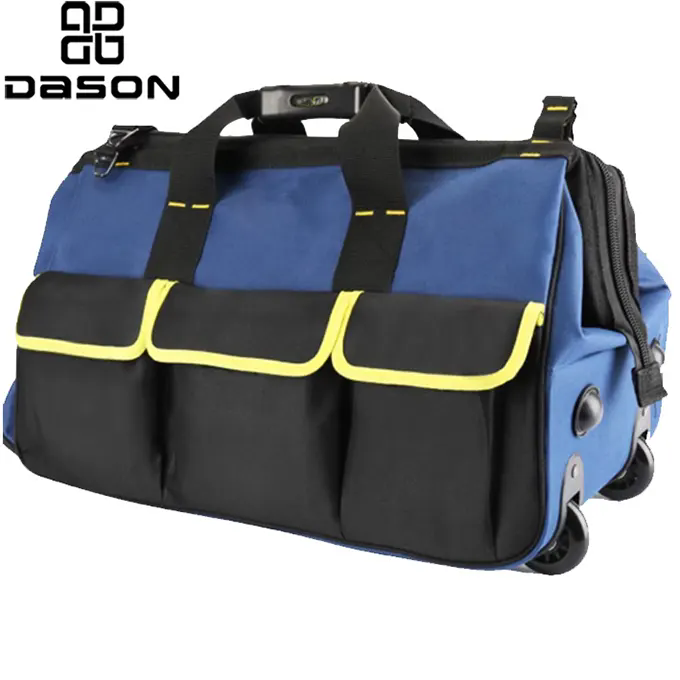
A reliable tool bag is defined by its structure, materials, and usability. Each feature serves a practical purpose in demanding work conditions.
- Durable Fabric: Heavy-duty polyester or reinforced canvas resists abrasion and tearing.
- Reinforced Base: A rigid or waterproof bottom protects tools from moisture and uneven surfaces.
- Multiple Compartments: Internal and external pockets allow logical tool organization.
- Ergonomic Handles: Padded grips and adjustable shoulder straps reduce carrying strain.
- Wide Opening Design: Enables quick access and visibility of tools during tasks.
These features collectively improve efficiency while extending the lifespan of both the bag and the tools it carries.
Tool Bag Specifications and Functional Design
| Specification | Description |
|---|---|
| Material | High-density polyester fabric with reinforced stitching |
| Base Structure | Hard-bottom or waterproof reinforced base |
| Capacity | Designed to hold hand tools, power tools, and accessories |
| Compartments | Multiple interior dividers and exterior quick-access pockets |
| Portability | Dual carry handles and detachable shoulder strap |
| Application | Electrical, mechanical, construction, and maintenance work |
This functional design allows users to maintain order while adapting to various working environments, from workshops to outdoor job sites.
Tool Bag Use Scenarios Across Industries
Tool bags are widely used across multiple industries due to their versatility and efficiency. Electricians benefit from compartmentalized layouts that separate insulated tools and testing equipment. Plumbers rely on reinforced bases to protect tools from wet environments. Maintenance teams appreciate portability when moving between facilities.
For mobile professionals, a tool bag reduces the need for multiple storage solutions. Everything required for daily tasks can be carried in one organized unit, minimizing unnecessary movement and interruptions.
Frequently Asked Questions
What size tool bag is suitable for daily professional use?
The ideal size depends on the number and type of tools used daily. Medium to large tool bags with multiple compartments are suitable for professionals who carry both hand tools and small power tools.
How does a tool bag protect tools compared to a toolbox?
A tool bag offers padded compartments, flexible storage, and shock absorption, reducing impact damage during transport. Reinforced bases also protect tools from moisture and rough surfaces.
Is a tool bag suitable for outdoor job sites?
Yes. Tool bags with waterproof bases and durable fabrics are specifically designed to withstand outdoor conditions, including dust, moisture, and uneven terrain.
How should a tool bag be maintained?
Regular cleaning with a damp cloth, avoiding overloading, and storing the bag in a dry area helps maintain structural integrity and prolong service life.
Conclusion and Contact Us
A well-designed tool bag plays a critical role in improving work efficiency, tool protection, and job-site organization. By addressing common pain points such as disorganization, tool damage, and portability challenges, it becomes an indispensable asset for professionals across industries.
Dason offers tool bag solutions designed with durability, functionality, and real-world application in mind. For more information, customized solutions, or bulk inquiries, contact us today and discover how the right tool bag can support your daily work with greater efficiency and reliability.