

How Does the Dance Barre Series Support Structured and Effective Movement Training?
2026-02-09
Abstract
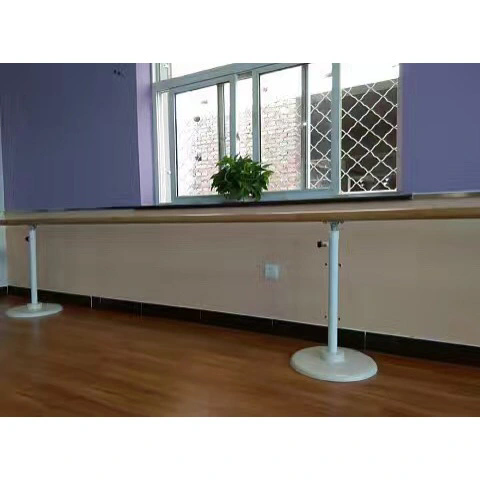
The Dance Barre Series has become an essential training solution for studios, fitness professionals, and individual users seeking structured, stable, and progressive movement practice. Designed to support balance, posture, flexibility, and muscle control, this series addresses common challenges such as limited space, inconsistent stability, and lack of adaptability across skill levels. This article provides a comprehensive overview of how a Dance Barre Series works, what problems it solves, and how it can be integrated into various training environments, helping buyers make informed and confident decisions.
Outline
- Understanding the Dance Barre Series
- Common Training Challenges in Dance and Barre Practice
- Core Components and Structural Design
- Applications Across Different Training Scenarios
- Key Benefits for Users and Facilities
- Comparison of Fixed vs. Modular Barre Systems
- Selection Guidelines for Buyers
- Maintenance, Safety, and Long-Term Use
- Frequently Asked Questions
- Conclusion and Professional Support
Understanding the Dance Barre Series
A Dance Barre Series refers to a coordinated range of barre systems designed specifically for dance training, ballet conditioning, and functional fitness routines. Unlike improvised or single-purpose barres, a complete series focuses on consistency in height, material, spacing, and load capacity, ensuring reliable support for repetitive movement practice.
These systems are commonly used in ballet studios, fitness centers, schools, rehabilitation spaces, and even home training environments. The emphasis is placed on stability, ergonomic grip, and adaptability, allowing users to focus on technique rather than equipment limitations.
Common Training Challenges in Dance and Barre Practice
Many practitioners encounter obstacles that reduce training efficiency or increase injury risk. A well-designed Dance Barre Series directly addresses these pain points.
- Insufficient stability causing imbalance during foundational exercises
- Fixed-height systems that do not accommodate different users
- Inconsistent materials leading to poor grip or discomfort
- Limited portability for multi-purpose or shared spaces
- Equipment wear that compromises safety over time
By standardizing design and functionality, a Dance Barre Series minimizes these issues and supports consistent progress.
Core Components and Structural Design
A professional Dance Barre Series typically consists of several integrated elements that work together to provide structural reliability and user comfort.
| Component | Functional Purpose |
|---|---|
| Barre Rail | Provides continuous hand support for balance and alignment |
| Support Legs or Wall Mounts | Ensures load distribution and structural stability |
| Adjustable Connectors | Allows height and length customization |
| Surface Finish | Improves grip comfort and resistance to wear |
These components are engineered to work as a unified system, reducing vibration and maintaining alignment during repeated use.
Applications Across Different Training Scenarios
The Dance Barre Series is not limited to traditional ballet training. Its versatility supports a wide range of movement disciplines.
- Classical ballet technique and warm-up routines
- Barre-based fitness and conditioning programs
- Stretching and flexibility development
- Rehabilitation and low-impact movement training
- Educational settings for structured instruction
This adaptability allows facilities to maximize space usage while maintaining professional training standards.
Key Benefits for Users and Facilities
Investing in a complete Dance Barre Series offers measurable advantages for both individual practitioners and commercial operators.
- Improved posture and alignment through consistent support
- Reduced injury risk due to stable and ergonomic design
- Enhanced training efficiency with standardized equipment
- Professional studio appearance that builds user confidence
- Long-term cost efficiency through durable construction
These benefits contribute directly to better training outcomes and user satisfaction.
Comparison of Fixed vs. Modular Barre Systems
Choosing the right configuration is an important decision. The table below highlights practical differences between common system types.
| Feature | Fixed Barre System | Modular Dance Barre Series |
|---|---|---|
| Installation | Permanent | Flexible and reconfigurable |
| User Adaptability | Limited | High |
| Space Efficiency | Static | Optimized for shared spaces |
| Long-Term Use | Location dependent | Expandable and adjustable |
Selection Guidelines for Buyers
When evaluating a Dance Barre Series, buyers should focus on practical and operational considerations rather than appearance alone.
- Material quality and surface finish consistency
- Load-bearing capacity and structural testing
- Compatibility with existing studio layouts
- Ease of installation and adjustment
- After-sales support and customization options
These criteria help ensure the system remains reliable throughout its service life.
Maintenance, Safety, and Long-Term Use
Routine inspection and basic maintenance are essential for preserving performance. Regular checks should include connection points, surface condition, and alignment accuracy. Cleaning with non-abrasive materials helps maintain grip quality and appearance without degrading the finish.
A well-maintained Dance Barre Series supports safe training conditions and extends equipment longevity.
Frequently Asked Questions
Is a Dance Barre Series suitable for beginners?
Yes. The structured design provides consistent support, helping beginners build balance and confidence while learning correct movement patterns.
Can the system be used in small spaces?
Modular configurations are specifically designed to adapt to limited or multi-purpose spaces without compromising stability.
How does a series differ from a single barre?
A series ensures consistency in height, spacing, and performance across multiple units, supporting standardized training environments.
Conclusion and Professional Support
A well-designed Dance Barre Series is more than a support tool; it is a foundational element of structured movement training. By addressing stability, adaptability, and durability, it enables users to focus on technique and progression rather than equipment limitations.
For facilities and professionals seeking reliable and scalable solutions, XinOuTai offers purpose-built Dance Barre Series options designed for long-term performance. To explore specifications, customization possibilities, or project support, please contact us to discuss how the right barre system can elevate your training environment.