

How Is the Camping Cooker Shaping Outdoor Cooking Habits?
2026-01-06
Abstract
The camping cooker has become a core piece of equipment for outdoor enthusiasts, overland travelers, and emergency preparedness users. This article provides a comprehensive and structured analysis of camping cookers, focusing on how product design, technical parameters, and usage logic influence real-world performance. By examining specifications, common user concerns, and market evolution, this guide clarifies how camping cookers support efficiency, safety, and adaptability in diverse outdoor environments.
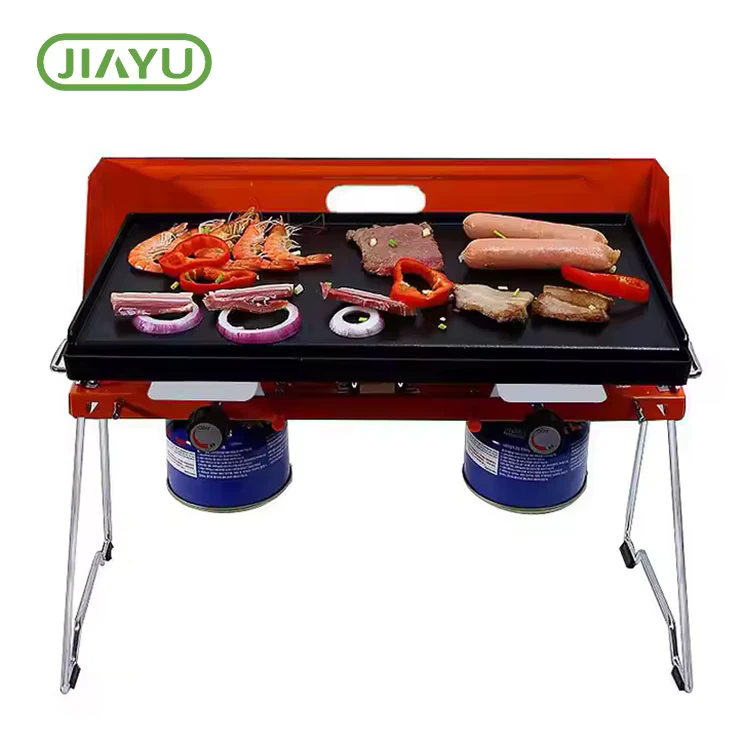
Table of Contents
- 1. How Does a Camping Cooker Function in Outdoor Environments?
- 2. How Do Camping Cooker Specifications Affect Performance?
- 3. How Should Common Camping Cooker Questions Be Answered?
- 4. How Will Camping Cookers Evolve in the Outdoor Equipment Market?
Outline
- Overview of camping cooker applications and positioning
- Technical parameter analysis and configuration logic
- Frequently asked questions with practical explanations
- Future development direction and brand value integration
1. How Does a Camping Cooker Function in Outdoor Environments?
A camping cooker is a portable cooking appliance designed to operate reliably in non-domestic environments such as campsites, mountains, deserts, and roadside travel stops. Unlike household stoves, camping cookers prioritize portability, fuel efficiency, structural stability, and environmental adaptability. The primary function is to provide controlled heat output for boiling, frying, and simmering food under variable weather and terrain conditions.
The core purpose of a camping cooker is not only food preparation but also time management and energy optimization. In outdoor settings, rapid ignition, consistent flame control, and wind resistance significantly affect cooking success. As outdoor activities diversify—from weekend camping to long-distance expeditions—the camping cooker has evolved into a multifunctional system rather than a single-purpose stove.
This article centers on how camping cookers meet modern outdoor demands through engineering design, standardized parameters, and user-oriented configuration.
2. How Do Camping Cooker Specifications Affect Performance?
Technical specifications directly determine how a camping cooker performs in real scenarios. Understanding these parameters helps users match equipment to specific outdoor use cases such as backpacking, vehicle camping, or emergency storage.
| Parameter | Specification Range | Practical Impact |
|---|---|---|
| Fuel Type | Butane / Propane / Mixed Gas | Determines availability, cold-weather performance, and burn stability |
| Heat Output | 2,000–3,500 W | Affects boiling speed and cooking efficiency |
| Ignition System | Piezoelectric Ignition | Enables fast, tool-free startup |
| Material | Stainless Steel / Aluminum Alloy | Balances durability with weight control |
| Weight | 1.5–3.0 kg | Impacts portability and packing strategy |
| Safety Features | Pressure Sensor, Auto Shut-off | Reduces risk during prolonged operation |
Each specification operates as part of an integrated system. For example, higher heat output requires compatible fuel efficiency and reinforced burner heads, while lightweight materials must still maintain structural stability under load. Selecting a camping cooker without evaluating parameter relationships often leads to mismatched expectations.
3. How Should Common Camping Cooker Questions Be Answered?
Q: How does a camping cooker maintain flame stability in windy conditions?
A: Flame stability is achieved through burner head design, wind-shield integration, and gas pressure regulation. Many camping cookers incorporate recessed burners and serrated flame ports to minimize wind interference.
Q: How should fuel consumption be calculated for multi-day camping?
A: Fuel consumption depends on heat output, cooking frequency, and meal type. On average, a 220g gas canister supports 3–5 simple meals when used with a 2,500 W camping cooker under moderate conditions.
Q: How can a camping cooker be safely stored after use?
A: After cooling, the fuel source should be disconnected, and the burner surface cleaned of residue. Storage in a dry, ventilated case prevents corrosion and protects ignition components.
Q: How does altitude affect camping cooker performance?
A: At higher altitudes, lower oxygen density can reduce combustion efficiency. Camping cookers with adjustable air intake and stable gas flow perform better in mountainous regions.
4. How Will Camping Cookers Evolve in the Outdoor Equipment Market?
The future development of camping cookers aligns closely with broader outdoor lifestyle trends. Lightweight modular designs, multi-fuel compatibility, and enhanced safety mechanisms are becoming standard expectations. Environmental considerations are also influencing material selection and fuel efficiency optimization.
From a market perspective, users increasingly value equipment that integrates seamlessly into a complete outdoor system, including cookware, storage, and transport solutions. As a result, camping cookers are transitioning from standalone tools to system-compatible components.
Within this context, JIAYU continues to focus on manufacturing camping cookers that balance performance parameters, safety compliance, and real-world usability. By aligning technical specifications with practical outdoor needs, JIAYU supports both recreational and professional outdoor cooking scenarios.
For further information on product configurations, technical documentation, or cooperation opportunities, contact us to explore how JIAYU camping cookers can support your outdoor equipment requirements.