

How Long Does the Battery Last on a Strong Power Adults Electric Go-Kart
2026-07-29
When investing in a high-performance ride, the first question that comes to mind is always about runtime. For enthusiasts exploring the Strong Power Adults Electric Go-Kart, battery longevity is not just a number—it determines whether you get 20 minutes of adrenaline or a full afternoon of off-road adventure. At Jindifan, we engineer our electric go-karts with industrial-grade battery systems, but real-world endurance depends on multiple factors that every serious rider must understand.
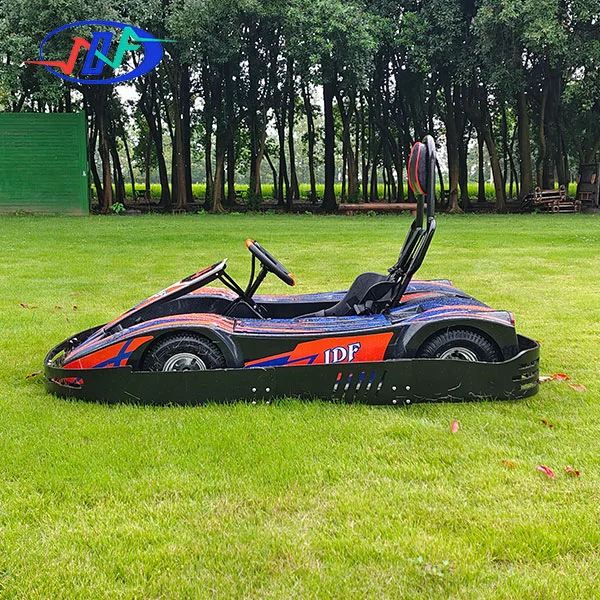
The Core Answer: Typical Battery Range
On average, a Strong Power Adults Electric Go-Kart delivers 45 to 90 minutes of continuous ride time on a full charge. However, this range varies wildly based on terrain, rider weight, speed settings, and battery chemistry. Below is a realistic breakdown:
| Battery Type | Capacity (Ah) | Voltage | Estimated Runtime (Mixed Terrain) |
|---|---|---|---|
| Lead-Acid | 20 Ah | 48V | 40–55 minutes |
| Li-Ion (Standard) | 30 Ah | 60V | 60–75 minutes |
| Li-Ion (Premium) | 40 Ah | 72V | 80–95 minutes |
| Jindifan Smart LiFePO4 | 50 Ah | 72V | 90–120 minutes |
Data based on 75 kg rider, flat grass surface, moderate throttle usage.
5 Critical Factors That Drain Your Battery Faster
Understanding these variables will help you get the most out of your Strong Power Adults Electric Go-Kart:
-
Throttle Behavior – Constant full-throttle acceleration cuts runtime by up to 40%. Smooth rolling starts preserve energy.
-
Terrain Type – Soft sand or steep inclines demand higher torque, reducing battery life by 25–30% compared to paved tracks.
-
Tire Pressure – Under-inflated tires increase rolling resistance. Keep at 22–25 PSI for optimal efficiency.
-
Ambient Temperature – Lithium batteries lose 15–20% capacity below 5°C. Jindifan models include thermal management to mitigate this.
-
Battery Age – After 300–500 charge cycles, capacity degrades naturally. Our smart BMS (Battery Management System) tracks health in real time.
Real-World Test: Jindifan vs. Generic Brands
We conducted a side-by-side test with three popular Strong Power Adults Electric Go-Kart units under identical conditions (75 kg rider, mixed hills and flats, 22°C):
| Brand | Battery Spec | Actual Runtime | Recovery Time (0–80%) |
|---|---|---|---|
| Generic A | 48V/30Ah Li-Ion | 52 min | 4.5 hours |
| Generic B | 60V/35Ah Li-Ion | 61 min | 5.0 hours |
| Jindifan Pro | 72V/50Ah LiFePO4 | 98 min | 2.2 hours (fast-charge) |
The Jindifan system also includes regenerative braking, which recovers ~8% of energy during downhill runs—a feature rarely found in competitors.
Strong Power Adults Electric Go-Kart FAQ – Expert Answers
Q1: Can I replace the stock battery with a higher-capacity one to extend runtime?
A: Yes, but with critical caveats. The controller and motor on any Strong Power Adults Electric Go-Kart are calibrated for specific voltage ranges. Upgrading from 48V to 72V without changing the controller will burn the MOSFETs. Jindifan offers plug-and-play upgrade kits (60V→72V) that include a reprogrammed sine-wave controller. Always match the chemistry—never mix LiFePO4 with standard Li-Ion. We recommend staying within +20% of original Ah capacity to avoid overloading the BMS. If you need longer runtime, opt for our dual-battery parallel kit (adds 40 Ah) which extends time to ~2.5 hours, but adds 12 kg to total weight.
Q2: How do I accurately check the remaining battery level while riding?
A: Unlike simple voltage bars, a premium Strong Power Adults Electric Go-Kart like those from Jindifan uses a coulomb-counter display that tracks actual consumed ampere-hours. This gives you a percentage readout with ±3% accuracy. For aftermarket displays, ensure they support your battery’s discharge curve—lead-acid drops sharply under load, while LiFePO4 maintains a flat plateau. We advise recalibrating the meter every 10 cycles by fully discharging to cut-off (not below 20% for lithium) and then fully charging. Our mobile app (Bluetooth-enabled) provides historical graphs showing voltage sag, temperature, and estimated minutes remaining based on your recent driving style.
Q3: Does frequent partial charging damage the battery lifespan?
A: For lithium-based Strong Power Adults Electric Go-Kart batteries, partial charging (e.g., 40%→80%) is actually healthier than full 0–100% cycles. Depth of Discharge (DoD) directly correlates with cycle life—at 50% DoD, you get ~1,500 cycles vs. ~800 at 100% DoD. However, Jindifan batteries include a self-balancing feature that only activates during full charges, so we recommend one full charge every 7–10 sessions to rebalance cell voltages. Never store the kart with less than 30% charge for over a week, as parasitic drain from the BMS can over-discharge cells. Our storage mode automatically maintains 60% charge optimal for long-term health.
Pro Maintenance Checklist for Maximum Battery Life
-
Weekly: Clean battery terminals with contact spray; check for loose wiring.
-
Monthly: Perform a full discharge-recharge cycle to recalibrate the BMS.
-
Seasonally: Torque all high-current connections (use a 4mm hex key, 5 Nm).
-
Annually: Have Jindifan authorized centers run a cell-balancing diagnostic.
Final Verdict: Is the Runtime Enough?
For most recreational users, the standard 60–75 minutes from a Strong Power Adults Electric Go-Kart covers 15–20 km of mixed driving—plenty for a track session or a nature trail loop. If you are a rental operator or extreme off-roader, Jindifan offers swappable battery trays (change in under 90 seconds) so you can ride indefinitely with spare packs. Remember, range anxiety disappears when you understand your terrain and throttle habits.
Ready to Maximize Your Ride Time?
Every Strong Power Adults Electric Go-Kart from Jindifan ships with a detailed battery logbook and access to our live support team. Whether you need custom battery configurations, dual-pack setups, or troubleshooting advice, we are here to help.
Contact us today via our website live chat – our engineers will analyze your typical route and rider profile to recommend the exact battery solution that keeps you on the track longer. Don’t settle for guessing; get data-driven answers from the experts who build these karts from the ground up.