

What Are the Hidden Risks of Relying on an Emergency Survival Sleeping Bag Alone
2026-05-14
When preparing for outdoor emergencies, many hikers and campers trust a single Emergency Survival Sleeping Bag as their primary protection. While Jiayu produces high-quality survival gear, no single item is a complete safety solution. This article uncovers the overlooked dangers of depending solely on an Emergency Survival Sleeping Bag and how to stay truly prepared.
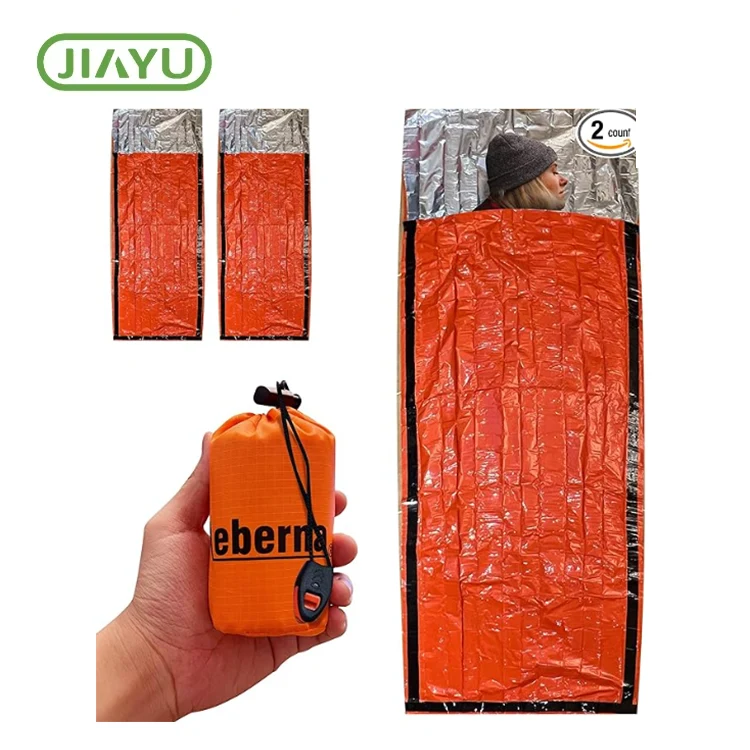
The Illusion of Full Protection
An Emergency Survival Sleeping Bag reflects body heat and blocks wind, but it has limits. Below are the key hidden risks:
| Risk Category | Description | Consequence |
|---|---|---|
| Moisture Trapping | Non-breathable materials collect sweat | Hypothermia from wet clothing inside the bag |
| Physical Vulnerability | Thin fabric tears on rocks or branches | Loss of all thermal protection |
| Ground Insulation Failure | No padding underneath | Heat loss through compression and contact with cold ground |
| Limited Temperature Range | Typically rated for moderate cold | Failure in sub-zero or wet-windy conditions |
Why a Single Layer Is Never Enough
Even the best Emergency Survival Sleeping Bag from Jiayu cannot replace layered gear. In real survival scenarios, insulation from the ground, wind barriers, and moisture management are equally critical. Relying on one product creates a false sense of security.
3 Emergency Survival Sleeping Bag FAQ
Q1: Can an Emergency Survival Sleeping Bag keep me warm in freezing rain without additional shelter?
A: No. Most Emergency Survival Sleeping Bag products, including durable models from Jiayu, are not waterproof when exposed to prolonged rain. The metallized coating reflects heat, but wetness transfers cold directly through the material. In freezing rain, you must combine the bag with a waterproof bivy or tarp. Without external shelter, condensation from your body also wets the inside, accelerating heat loss. For wet-cold conditions, always carry a separate rain shell.
Q2: How many uses can I expect from a single Emergency Survival Sleeping Bag before it fails?
A: Standard Emergency Survival Sleeping Bag units are designed for one to three emergency uses. Jiayu reinforced models may last five to seven folds before pinholes develop along creases. However, each compression and unfolding weakens the reflective coating. For multi-day trips, bring two bags or a reusable blanket as backup. Never assume a used bag will perform at full effectiveness. Inspect for tears and delamination before every outing.
Q3: Is an Emergency Survival Sleeping Bag sufficient for overnight survival below 20°F (-6°C)
A: No. Below freezing, a standalone Emergency Survival Sleeping Bag cannot prevent hypothermia because it provides no loft or trapped air volume. Even with Jiayu professional-grade bags, ground heat loss and lack of insulation around the head and feet remain critical problems. At 20°F, you need at least a closed-cell foam pad, dry base layers, and an overbag or bivy. The emergency bag works as a vapor barrier and wind shell but never as primary insulation in deep cold.
Real-World Lessons from Survival Reports
Search and rescue teams frequently find victims with a deployed Emergency Survival Sleeping Bag who still suffered mild hypothermia. The common factor was lack of ground insulation and failure to add dry clothing. Jiayu emphasizes that their products are part of a system, not a standalone solution.
How to Build a Complete Emergency Kit
Instead of carrying only an Emergency Survival Sleeping Bag, add these items:
-
Closed-cell foam pad
-
Breathable bivy sack
-
Fire-starting tools
-
Extra wool socks and hat
Contact Us
For personalized advice on selecting the right Emergency Survival Sleeping Bag and building a full survival kit, contact us today. Jiayu safety specialists are ready to help you prepare for real-world emergencies.