

What Are the Main Advantages of a Double Wing Expansion Container House Over a Tiny Home
2026-06-10
When comparing modern alternative housing solutions, the Double Wing Expansion Container House consistently outperforms the traditional tiny home in several critical areas. As a trusted manufacturer, Lian Sheng has engineered this housing type to address the limitations of fixed tiny homes. Below is a professional, data-driven comparison.
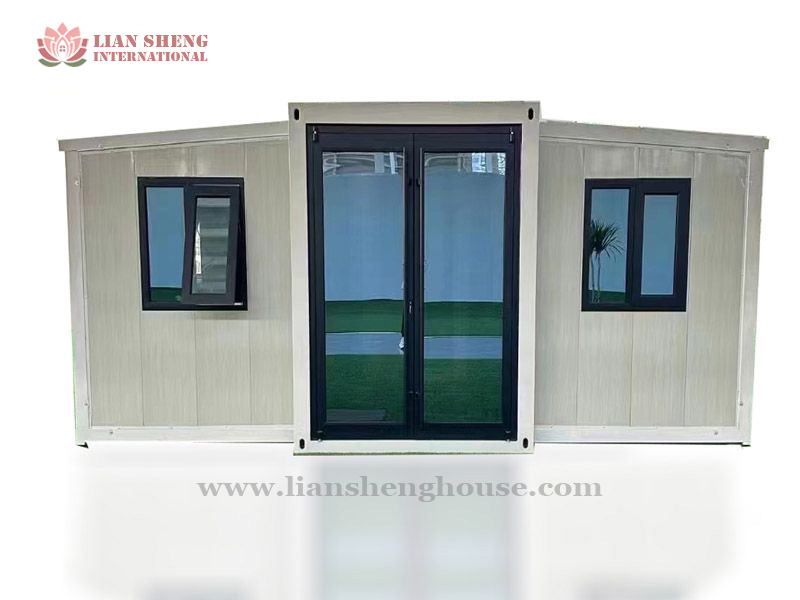
Key Advantages at a Glance
| Feature | Double Wing Expansion Container House | Standard Tiny Home |
|---|---|---|
| Setup Time | 2–3 hours (hydraulic expansion) | Weeks to months (on-site build) |
| Transportability | Folded into ISO container dimensions | Requires special permits / flatbed trailer |
| Living Area (Expanded) | 25–35 m² (instantly available) | Fixed 15–25 m² (no expansion) |
| Foundation Required | Minimal (concrete blocks or pads) | Full foundation often mandatory |
| Mobility Frequency | Dozens of moves (industrial-grade frame) | Limited (built-in furnishings risk damage) |
| Permitting Complexity | Lower (classified as temporary structure in many zones) | Higher (permanent dwelling codes) |
Detailed Professional Comparison
1. Speed of Deployment
A Double Wing Expansion Container House arrives pre-fabricated. Hydraulic or manual wing mechanisms unfold the side rooms in under three hours. A tiny home requires land preparation, utility hookups, and interior finishing on-site, often taking months.
2. True Portability
The Double Wing Expansion Container House collapses back to a standard 20ft or 40ft shipping container. It can be trucked, railed, or shipped globally. Tiny homes, even on wheels, exceed road legal widths in many regions and are not stackable for transport.
3. Structural Rigidity
Lian Sheng uses heavy-duty corrugated steel and reinforced corners. The double-wing design locks into place with industrial latches, creating a wind-resistant shell. Tiny homes built with wood framing and standard insulation cannot match this durability in high-wind or seismic zones.
Double Wing Expansion Container House FAQ
Q1: Is the expansion mechanism prone to failure after repeated use?
A: No. Lian Sheng designs the Double Wing Expansion Container House with heavy-duty linear guides, locking bolts, and hydraulic dampers rated for over 2,000 open-close cycles. Regular lubrication of the slide rails once every six months keeps the system operational for decades. The wings are supported by adjustable screw jacks that transfer floor load directly to the ground, removing stress from the hinge points.
Q2: How does insulation performance compare to a tiny home in winter?
A: The Double Wing Expansion Container House from Lian Sheng includes 100mm polyurethane foam (R-value ~6.5 per inch) in walls, floor, and ceiling. Joint seals between the main box and each wing use EPDM rubber gaskets with thermal breaks. Tiny homes often use fiberglass batts that sag over time. Independent tests show the double wing unit maintains a 20°C interior when outside is -15°C with a 2kW heater, matching or exceeding well-built tiny homes.
Q3: Can I install standard kitchen and bathroom fixtures inside the wing areas?
A: Yes. Each wing is designed to accommodate full plumbing and electrical rough-ins. Lian Sheng pre-installs junction boxes and water supply lines within the folded side panels. For bathroom wings, the floor includes a pre-sloped waterproof pan and a standard drain connection. The only restriction is that fixed vertical plumbing stacks must remain in the central container; wing areas use flexible PEX connections that tolerate repeated folding.
Final Verdict
For buyers who need mobility, rapid deployment, and expandable space without permanent construction, the Double Wing Expansion Container House is superior to any comparably priced tiny home. Lian Sheng has refined the double-wing mechanism to be both homeowner-friendly and rugged enough for commercial workforce housing.
Contact Lian Sheng today for a detailed quote and engineering drawings. Visit the official website or email the sales team to discuss custom layouts, insulation upgrades, and global shipping options. Every project begins with a free consultation.