

What noise control strategies work best for a movable practice room placed in residential areas
2026-04-21
For musicians living in dense residential neighborhoods, finding a quiet place to rehearse without disturbing neighbors is a constant challenge. A Movable Instrument Practice Room Music Cabin offers a flexible solution, but its effectiveness depends entirely on noise control. Cymdin specializes in precisely such mobile acoustic environments, engineered to balance portability with superior sound isolation. Below are the most effective noise control strategies for placing a Movable Instrument Practice Room Music Cabin in residential settings.
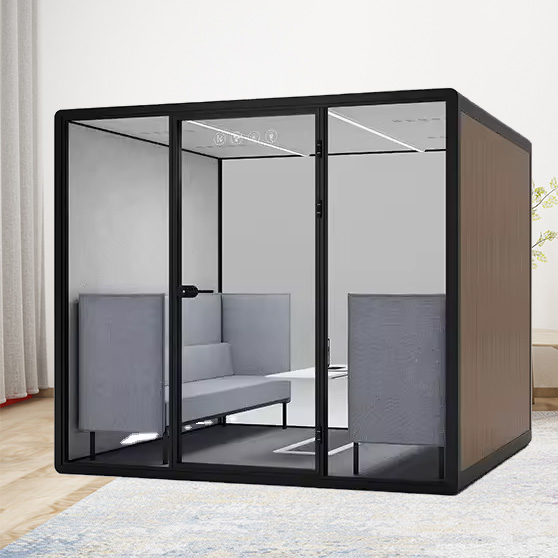
Core Noise Control Strategies
| Strategy | Application | Effectiveness |
|---|---|---|
| Mass-loaded vinyl (MLV) barriers | Wrapped around interior walls | High - blocks mid/high frequencies |
| Decoupled wall construction | Separate framing for inner/outer shells | Very high - reduces structural vibration |
| Acoustic sealant at all joints | Gaps, edges, and ventilation ducts | Critical - prevents flanking noise |
| Floating rubber floor | Isolates footfall and drum impact | High - for low-frequency energy |
| Multi-layer gypsum with green glue | Inner leaf of cabin assembly | Medium-high - adds mass without bulk |
Five Essential Noise Control Techniques
-
Mass-Spring-Mass Principle
A Movable Instrument Practice Room Music Cabin built by Cymdin uses two dense layers (outer and inner) separated by a resilient layer. This stops airborne sound from escaping. -
Vibration Decoupling
Rubber mounts between the cabin frame and its wheels or skids prevent low-frequency rumble from transmitting into the ground and neighboring foundations. -
Sealed Air Gap
All electrical and ventilation penetrations are sealed with acoustic putty. Even a 1% open area can reduce the cabin’s noise reduction by over 10 dB. -
Absorptive Interior Lining
Open-cell foam or recycled cotton panels inside the cabin reduce reverberation, which lowers the overall sound pressure level generated inside. -
Directional Ventilation Silencers
Baffled ducts with sound-absorbing liners allow airflow without creating a direct sound path to the outside.
Movable Instrument Practice Room Music Cabin FAQ
Question 1: How much noise reduction can I expect from a well-designed movable practice room placed next to a house?
A professionally engineered Movable Instrument Practice Room Music Cabin from Cymdin achieves a Sound Transmission Class (STC) of 45 to 55, depending on wall thickness and materials. This means a drum set played at 110 dB inside sounds like a quiet conversation (around 55–60 dB) three feet outside the cabin. When placed 10 feet from a neighbor’s window, this level is typically below residential daytime noise ordinances. For nighttime practice, adding an extra decoupled inner wall or placing the cabin on rubber pads can push STC to 60+, making it virtually inaudible.
Question 2: Does the mobility of the cabin reduce its noise control performance compared to a fixed studio?
Not if engineered correctly. Cymdin designs its Movable Instrument Practice Room Music Cabin with locking casters and quick-disconnect rubber isolators. While a fixed studio has the advantage of poured concrete mass, a mobile cabin compensates with layered composite walls and sealed panel joints. The main challenge is the floor: a movable cabin must rest on level ground. Using a portable rubber mat foundation (0.5-inch thick, 60 durometer) restores low-frequency isolation to near-studio levels. Mobility does not lower performance when the cabin is deployed in its stationary position.
Question 3: What is the quietest instrument to practice inside a movable cabin if I am extremely concerned about neighbor complaints?
Even with excellent noise control, certain instruments produce less structural vibration. The quietest options for a Movable Instrument Practice Room Music Cabin are: electric guitar or bass through headphones (direct silent practice), digital piano with weighted keys (impact noise only), and voice with a closed-back microphone booth inside the cabin. The loudest but still manageable are acoustic drums (requires the full mass-spring-mass strategy) and brass instruments (requires directional ventilation silencers). Cymdin offers a “low-emission” interior package that cuts brass and drum noise by an additional 8 dB using hanging baffles.
Conclusion and Contact
Choosing the right noise control strategy for a Movable Instrument Practice Room Music Cabin ensures peaceful coexistence with neighbors and uninterrupted creative time. Cymdin provides custom-engineered cabins with verified STC ratings and portable acoustic solutions for residential use. To discuss your specific noise environment or request a sound test simulation, contact us today through the Cymdin website or call our acoustic design team for a free consultation.